Tracking how long it will take for enough Americans to receive the COVID-19 vaccine

As we all wait for things to return to some sense of normalcy, much of our hopes are centered around the vaccines. The World Health Organization estimates between 65% to 70% of the population will need to be vaccinated to achieve herd immunity, which equates to about 225 million Americans. How long will it take to achieve this number?

I will calculate the pace weekly to gauge where we are with the vaccine efforts. The number is expected to fluctuate from week-to-week as the pace either slows or is sped up. The methodology is explained below the graphic.

Population data retrieved from Census.gov.
Vaccination data retrieved from the CDC COVID-19 https://covid.cdc.gov/covid-data-tracker/#vaccinations.
Vaccination pace current as of 12/29/2020

Methodology Explained

The total number of vaccines administered is retrieved from the CDC COVID Data Tracker. The estimated vaccines needed was calculated by averaging the World Health Organization estimate for vaccines administration rate for herd immunity, which is between 65% to 70% (averages to 68%). The remaining vaccines needed is calculated by subtracting total vaccines administered, and then is divided by the vaccines administered per day the prior two-weeks, which give the estimated time until herd immunity.
The perfect storm of black health disparities and COVID-19 in one graph

Last week the CDC released a data snapshot of the demographics of COVID-19 hospitalizations in America. The data showed concerning numbers regarding the disproportionate COVID-19 hospitalizations and sever-illness cases among black people.

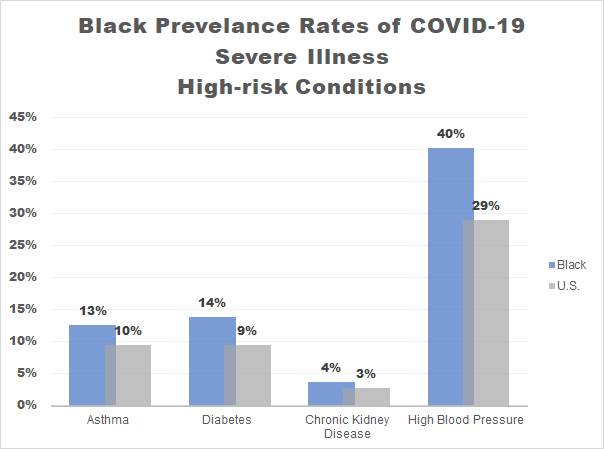
In the release, black people accounted for about 33 percent of COVID-19 hospitalizations in the U.S., although we make up about 13 percent of the U.S. population. Public health officials are attributing these numbers in part to health disparities of the black community, which leads to the fact that black people suffer from many of the conditions that place people at risk of severe illness from COVID-19. The underlying medical conditions include chronic lung disease, high blood pressure, diabetes, chronic kidney disease, and people with liver disease. Below is a chart of some of these conditions in the black community compared to the general population.

Sources: Centers for Disease Control and Prevention
Note:Years of data generation: Asthma (2018), diabetes (2017), chronic kidney disease (2017), and hypertension (2015)
Credit: Brandon Tucker

This crisis has magnified the health disparities of black people in America. The CDC data was only an early snapshot, but I’m willing to bet this trend will continue as we move through this crisis.